 Image: GeorgeWilliams21, CC BY-SA 4.0, via Wikimedia Commons
Can a vegetative patient hear you
A patient in a vegetative state opens her eyes, sleeps and wakes, breathes on her own, and shows no sign of awareness of herself or her surroundings. She does not follow a command, fix her gaze on a face, or respond to her name. The diagnosis is made at the bedside, from behaviour, after a period of weeks to months following a severe brain injury, and until 2006 it was assumed that the absence of behaviour meant the absence of a mind. The assumption had never been tested, because there was no way to test it.
Tennis
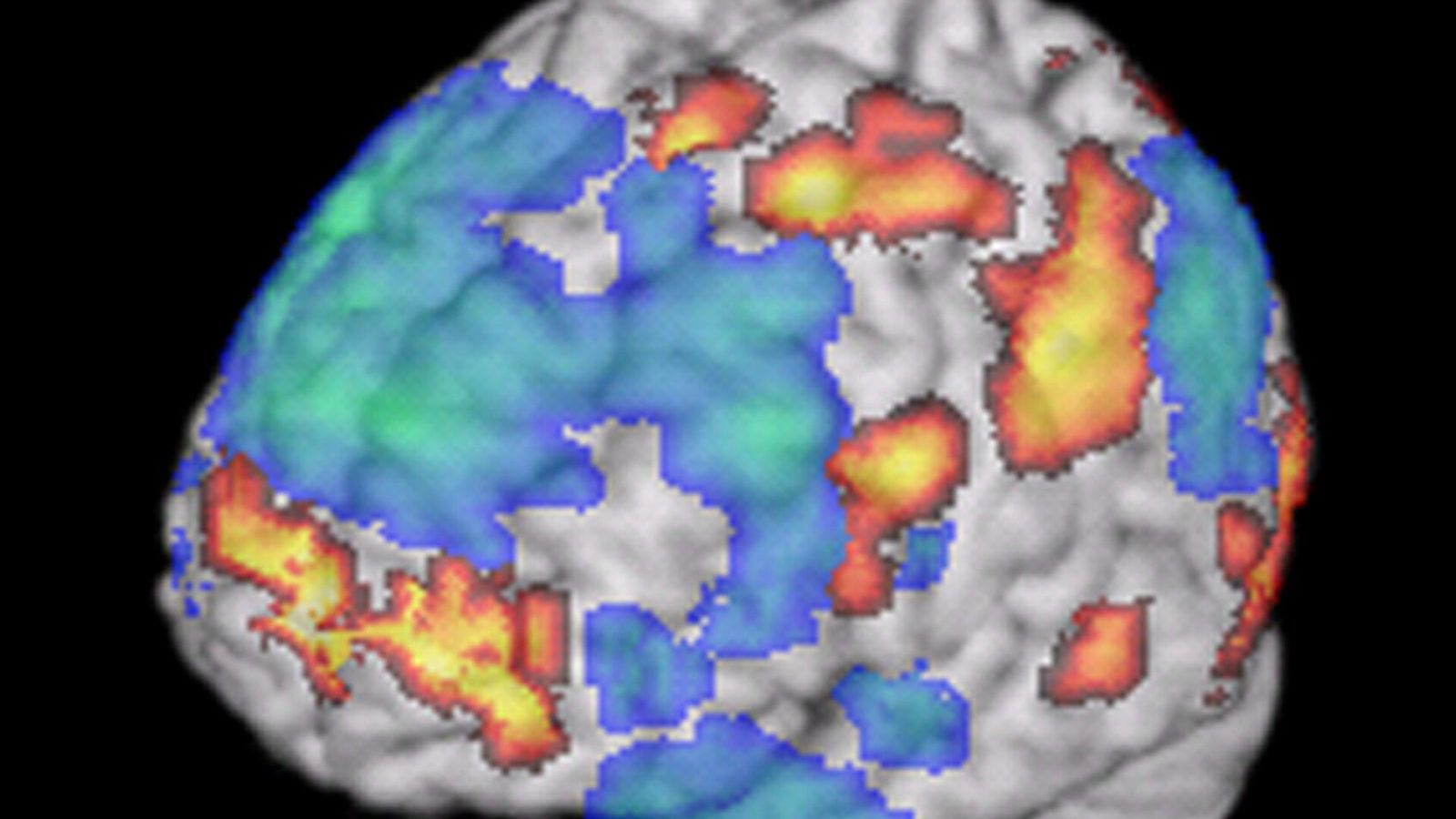
Adrian Owen and colleagues in Cambridge found a way. They asked healthy volunteers in an fMRI scanner to imagine playing tennis for 30 seconds, then to rest, and found that the instruction reliably activated the supplementary motor area, a region that plans movement. Asked to imagine walking from room to room of their home, the volunteers activated a different region, the parahippocampal gyrus, which handles spatial scenes. The two patterns were distinct and consistent across people. Then they gave the same instructions to a 23-year-old woman who had been in a vegetative state for five months after a road accident, and who had met every behavioural criterion for the diagnosis.
Her brain did what the volunteers' brains had done. Tennis activated her supplementary motor area and the house activated her parahippocampal gyrus, in the right order, for the right 30 seconds, each time. The report in Science in September 2006, "Detecting Awareness in the Vegetative State", is at the journal and is one page long. The argument it makes is simple. Following a spoken instruction to imagine something, and sustaining the image for half a minute, and switching to a different image on a different instruction, is not a reflex. It requires understanding the words and deciding to comply. Whatever else was true of this patient, she was aware.
Critics asked whether the activation could be an automatic response to the words tennis and house. Later work answered: the activation lasts for the full 30 seconds rather than the second or two that an automatic response to a word lasts, it switches on a command to stop, and it does not appear when the words are presented without an instruction.
Yes and no
In 2010 Martin Monti, Owen, Steven Laureys, and colleagues in Cambridge and Liège reported the same test in 54 patients, 23 diagnosed as vegetative and 31 as minimally conscious. Five could produce the imagery patterns on command, four of them from the vegetative group. With one of them, a 29-year-old man injured in a road accident five years earlier, they went further: tennis would mean yes and the house would mean no, and they asked him questions about his life to which only he and his family knew the answers. Is your father's name Alexander? Do you have any brothers? He answered five of six correctly; the sixth produced no clear signal. The paper, in the New England Journal of Medicine, is at the journal.
Four of 23 is about 17%, and that figure has held up. A meta-analysis in 2016 of studies using fMRI or EEG put the share of patients diagnosed as vegetative who show covert command following at roughly 15%, and a six-centre study of 241 patients with disorders of consciousness published in 2024 in the same journal found the dissociation in about a quarter, more often in younger patients and in those injured by trauma. The condition has a name, cognitive motor dissociation, and the bedside diagnosis that misses it is now known to be wrong for something like one patient in five or six.
Without a scanner
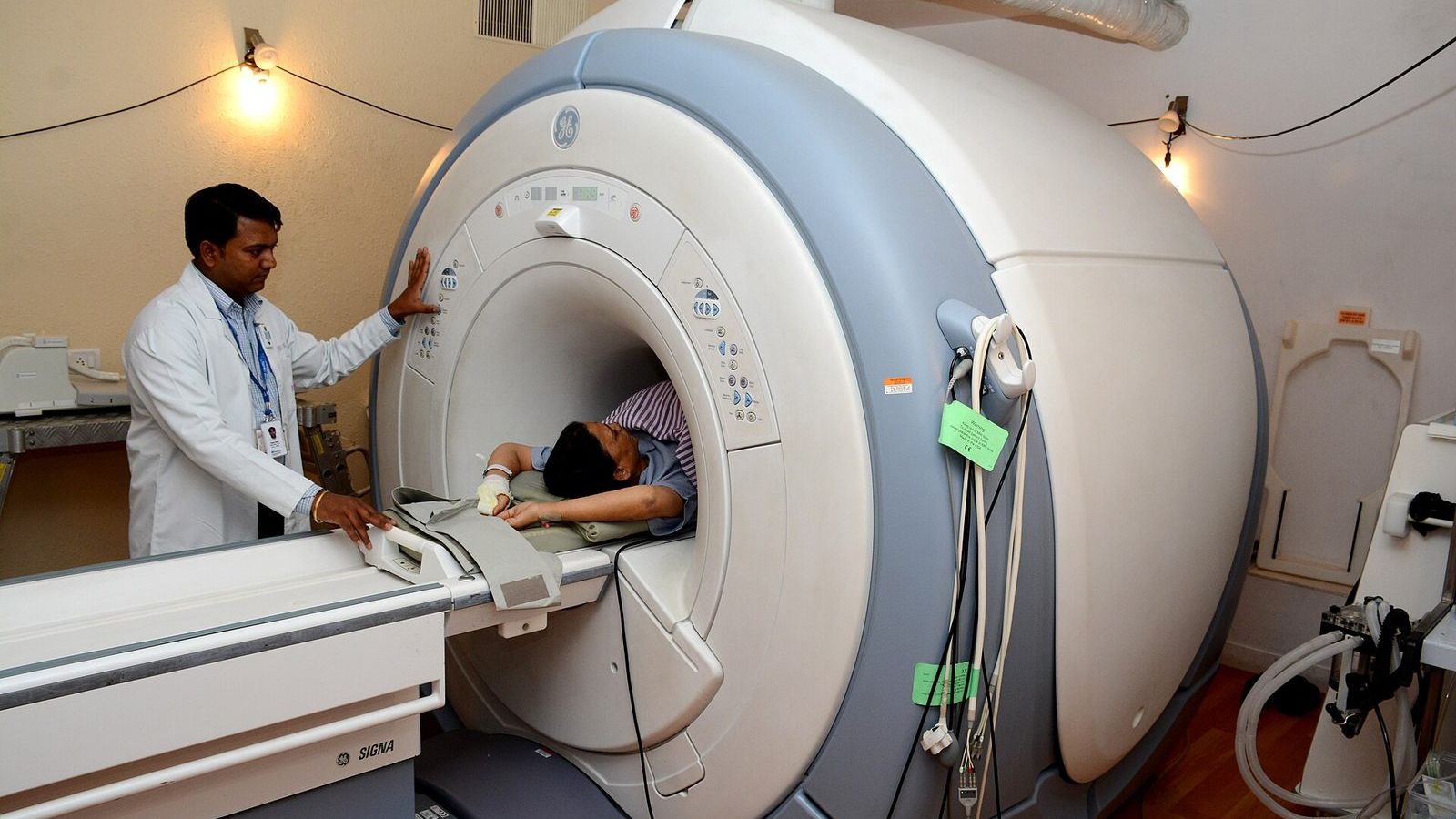
An fMRI scanner cannot be brought to a bed, and many of these patients cannot be moved to one. The same logic works with EEG. Ask the patient to imagine squeezing a hand or wiggling toes, repeatedly, and a classifier trained on the EEG of healthy volunteers can detect the pattern. Jan Claassen and colleagues at Columbia applied the test to 104 patients in intensive care within days of an acute brain injury, before any diagnosis could be made, and found the pattern in 15%. The follow-up is the important part: of the patients who showed it, half had recovered enough to follow commands by the time they left hospital, against a quarter of those who had not, and at a year 44% of them could function independently for part of the day, against 14%. The paper, in the New England Journal of Medicine in 2019, is at the journal. A sign of covert awareness in the first week predicts recovery, which changes what a family and a medical team decide in that week.
Measuring consciousness without asking for anything
All of these tests require the patient to understand language and to cooperate, and a patient who is aware but cannot do either would be missed. Marcello Massimini and Giulio Tononi in Milan designed a measure that requires nothing. A pulse of transcranial magnetic stimulation is delivered to the cortex and the EEG response across the scalp is recorded for the next few hundred milliseconds. In a conscious brain the response is complex, spreading through different regions in a changing pattern; in deep sleep or under anaesthesia it is a simple local wave that dies out. The complexity of the response is compressed with the algorithm a computer uses to zip a file, and the result, the perturbational complexity index, is a single number between 0 and 1. Adriano Casali and colleagues showed in 2013 that a threshold of about 0.3 separates every conscious state they tested, waking, dreaming, and the locked-in state, from every unconscious one, and that some vegetative patients scored above it. The paper, in Science Translational Medicine, is at the journal.
The index is a measurement of consciousness that does not ask for a report, which is the thing that measures of consciousness had never been able to do, and it is a test of the theory it came from, integrated information theory, which Unit 16 of the masterclass presents alongside its rivals and the 2023 adversarial collaboration that set them against each other.
What it means at the bedside
For the patient, the answer to the question in the title is that some of them can hear you, and that nobody can tell which from the outside. The practical consequences have followed slowly. Guidelines in the United States and Europe since 2018 recommend that patients who appear vegetative be reassessed with standardized scales and, where available, with imaging or EEG before decisions are made about care. Clinicians are advised to speak to patients as if they can hear, which costs nothing and is right for a fifth of them. And the question of what these patients experience, whether a signal in the supplementary motor area means a life with thoughts or a flicker of compliance in the dark, is open, and is the hardest question the unit on consciousness asks.
The young woman of 2006 regained some behavioural responsiveness in the months after the scan. The man who answered five questions was still unable to move or speak when the paper was published. He knew his father's name.