 Image: Santiago Ramón y Cajal (modified by Looie496), public domain, via Wikimedia Commons
Henry Molaison and the two kinds of memory
Henry Molaison had his first major seizure at 15, and by his mid twenties he was having several minor ones a day and a major one about once a week, on doses of anticonvulsants that left him unable to work. In August 1953 he was referred to William Scoville, a neurosurgeon at Hartford Hospital in Connecticut, who had been treating a few psychiatric patients by removing parts of the medial temporal lobe. Scoville proposed the same operation for the epilepsy. On 1 September 1953, with the patient awake under local anaesthetic, he removed about 8 cm of tissue from the inner surface of each temporal lobe: the amygdala, most of the hippocampus, and the cortex around them.
The seizures became less frequent and less severe. The cost was discovered within days. Henry could not find his way to the bathroom, did not recognize the staff who had cared for him since the operation, and could not remember what he had eaten for lunch. He was 27, and he never formed a lasting memory of a new event again.
What he lost and what he kept
Scoville reported the case with Brenda Milner, a psychologist from the Montreal Neurological Institute, in 1957 in the Journal of Neurology, Neurosurgery, and Psychiatry, under the title "Loss of recent memory after bilateral hippocampal lesions". The paper is free to read. It describes ten patients, but H.M., as he was called in print for the next 55 years, was the clearest case.
His intelligence was intact. On the Wechsler scale he scored 112 after the operation, slightly above average and no lower than before. His language, his perception, and his reasoning were normal. He could hold a conversation and keep a number in mind for as long as he was allowed to rehearse it; in one test he held the number 584 for 15 minutes by working out a mnemonic for it, and a minute after being distracted he remembered neither the number nor the mnemonic nor that he had been asked to remember anything. His memory for the years before the operation was mostly preserved, with a gap of a few years just before it. What was gone was the ability to turn a present experience into a memory that would still be there tomorrow.
The sharp line was between short-term memory, which was normal, and the storage of new long-term memories, which had stopped. The site of the damage said where that storage depended on the brain. Before 1953, the hippocampus had been thought to be concerned with smell or with emotion, and memory had been thought to be spread across the cortex rather than depend on any one structure. After 1957, every textbook put the medial temporal lobe at the centre of memory, and the neurosurgical profession stopped removing it on both sides.
The mirror and the star
The second discovery came from a task that Milner gave him in 1962. He was asked to trace the outline of a five-pointed star with a pencil, keeping the line between two printed outlines, while he could see his hand and the star only in a mirror. Everyone finds this hard at first, because every movement goes the wrong way. Henry did ten trials a day for three days. His errors fell from about 30 on the first trial to a handful on the last, which is the learning curve of a normal person. On each of the three days he said he had never seen the task before.
He had learnt without knowing that he had learnt. Milner's result showed that there is a kind of memory, the memory for skills and habits, that does not depend on the medial temporal lobe and does not require any awareness of having a memory at all. Over the following decades the division was mapped out in more detail: Henry also showed normal priming, the faster processing of a word or picture seen before, and normal classical conditioning, while his memory for facts and events stayed absent. The two kinds are now called declarative memory, for facts and events, and non-declarative memory, for skills, habits, priming, and conditioning, and the distinction is the backbone of Unit 5 of the masterclass.
Fifty-five years of testing
Henry was tested by Milner, then by her student Suzanne Corkin at the Massachusetts Institute of Technology, and by more than a hundred researchers in all, usually for a week or two at a time. He was cooperative, good humoured, and did crossword puzzles for hours, and he never knew who the researchers were from one visit to the next. Corkin's review of 2002 in Nature Reviews Neuroscience, "What's new with the amnesic patient H.M.?", summarizes what was learnt and is at the journal.
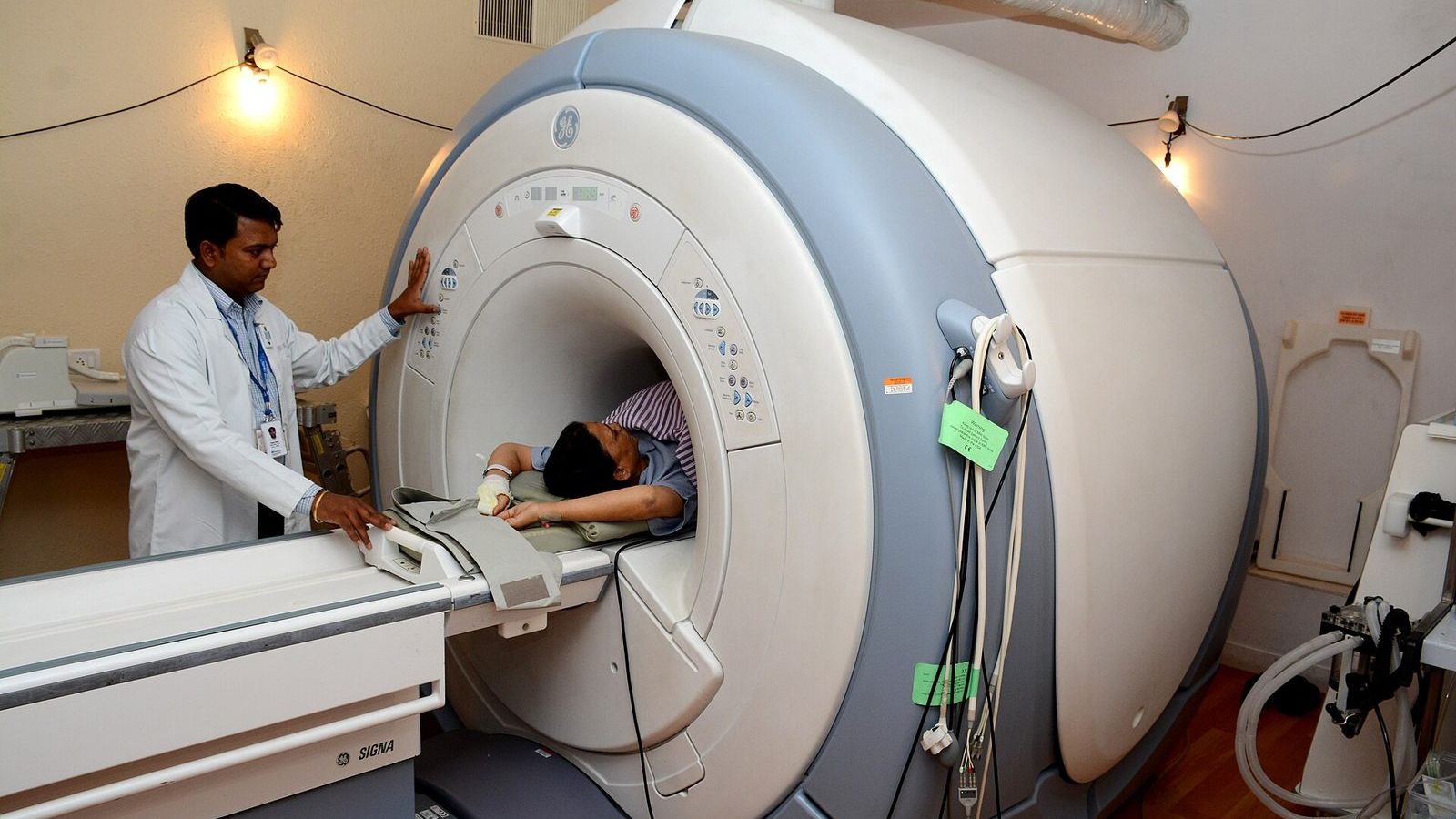
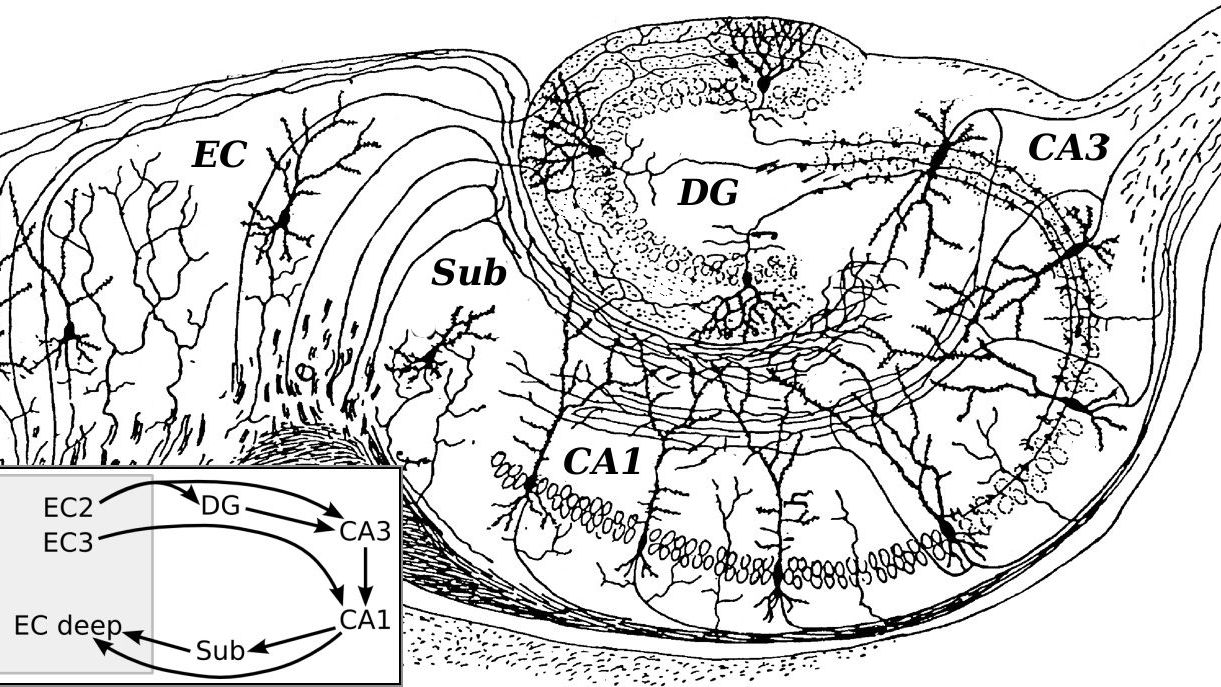
Some of the findings complicated the simple picture. Henry had learnt a little about events after 1953: he knew that a president had been assassinated and could pick out some faces of people who became famous after his operation, when given a first name as a cue. The details were thin and he could not say where he had learnt them, but they were there, which suggested that other structures can absorb facts slowly by repetition. Magnetic resonance images taken in 1997 showed that the lesion was smaller than Scoville had reported: about 2 cm of the back of each hippocampus remained, although it was shrunken and probably not working, and the entorhinal cortex, which is the hippocampus's main input, was gone. The patient on whom the role of the hippocampus had been built had a partial hippocampal lesion and a complete lesion of the cortex next to it, and the debate about which part matters for what has gone on since.
After 2008
Henry Molaison died on 2 December 2008, aged 82, in a nursing home in Connecticut. His name was published with his death, as he and his guardian had agreed. His brain was scanned overnight and then taken to the University of California, San Diego, where Jacopo Annese and his team froze it and, in December 2009, cut it into 2,401 slices in a 53-hour session that was streamed online. The slices were photographed, stained, and assembled into a three-dimensional model. The results, published in 2014 in Nature Communications and free to read, confirmed the MRI findings and added a small lesion in the left frontal lobe, probably made during the surgery, that nobody had known about.
He is a strange figure to end up famous: a man who did not know he was famous and could not have remembered being told. What he gave the field was a single, clean dissociation that no experiment in healthy people could have produced. Everything in the modern science of memory, from the place cells of the hippocampus to the question of how a memory is moved into the cortex over years, starts from the fact that a 27-year-old lost one kind of memory on 1 September 1953 and kept the other. Unit 14 follows that fact into the brain.