 Image: Emma Pease, CC BY-SA 4.0, via Wikimedia Commons
The Stanford prison experiment in the archives
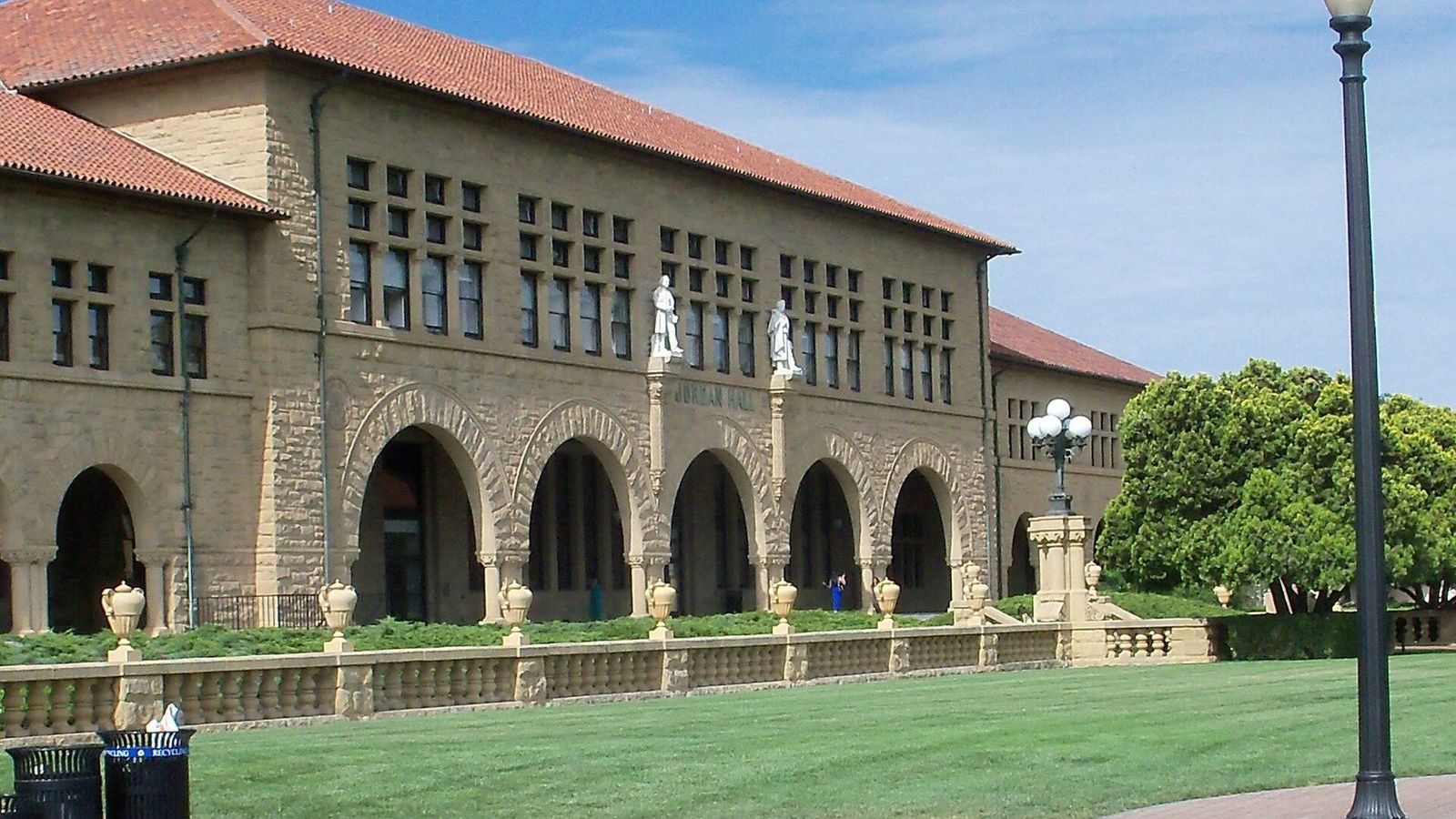
In August 1971 Philip Zimbardo turned the basement of the psychology building at Stanford University into a mock prison. From 75 applicants to a newspaper advertisement he selected 24 male students, judged the most stable on a battery of tests, and assigned them by coin toss to be prisoners or guards at $15 a day. The prisoners were arrested at home by the Palo Alto police, stripped, deloused, given smocks and numbers, and locked in three cells. The guards were given khaki uniforms, mirrored sunglasses, and batons, and worked in eight-hour shifts. The study was planned to run for two weeks. Zimbardo stopped it after six days.
The account that went into every textbook was that the guards became cruel on their own, within a day or two, humiliating the prisoners, depriving them of sleep, and inventing punishments, while the prisoners became passive and several broke down. The conclusion was that the situation, not the people, had produced the cruelty: give ordinary students a role and power, and the role takes over. The study was never published in a peer-reviewed psychology journal. Its first full report appeared in 1973 in a naval research bulletin and in the International Journal of Criminology and Penology, and it reached the public through lectures, a slide show, and from the 1990s a website.
What the archive holds
Zimbardo deposited his records, recordings, and films in the Stanford University archives, and from 2011 they were open to researchers. The French writer Thibault Le Texier read them for a book published in French in 2018 and for a paper, "Debunking the Stanford Prison Experiment", in the American Psychologist in 2019, at the journal. The same journal published a paper by Alexander Haslam, Stephen Reicher, and Jay Van Bavel on one recording in the archive, also at the journal. The archive itself is online. Three findings matter most.
The guards were told what to do. On the day before the prisoners arrived, Zimbardo and his assistant David Jaffe, an undergraduate who had run a similar mock prison in his dormitory three months earlier and who acted as warden, held an orientation for the guards. The recording has Zimbardo telling them that they could create in the prisoners feelings of boredom, a sense of fear, a notion of arbitrariness, that the prisoners would have no privacy and no freedom of action, and that the guards would have all the power. The rules the prisoners lived under, the counts in the night, the push-ups, and the use of the solitary cell were in a document written by Jaffe before the study, drawn from his dormitory version. The guards did not invent the regime. They applied one.
A reluctant guard was pushed. The recording that Haslam and his colleagues analysed is of Jaffe speaking to a guard named John Mark, who had been too gentle. Jaffe tells him that the guards have to be tough, that the experiment depends on it, and that it is for a good cause, the reform of prisons. Mark agrees to try. The exchange reads like a manager persuading an employee rather than a role taking over a mind, which is the engaged-followership account the same authors have applied to Milgram's participants.
The famous breakdown was, by its subject's account, not one. Prisoner 8612, Douglas Korpi, whose screaming on the second day is the best-known footage of the study, said in interviews in 2017 that he had been acting in order to be released, because he had expected to study for an exam in the prison and had not been allowed his books. He had been a prisoner for 36 hours. Zimbardo's account is that Korpi's distress was real, and the two accounts are not fully reconcilable; what the archive shows is that the study's own records are compatible with Korpi's.
What that does to the conclusion
The study is still evidence about something. Students did follow instructions to be harsh, some went further than instructed, and the prisoners suffered. But the conclusion that was taught, that the role alone produced the cruelty in people who had been given no direction, is not supported by the study's own records. Guard behaviour varied: about a third were described by Zimbardo as cruel, a third as fair, and a third as kind to the prisoners, which is not what a situation that overwhelms personality would produce. And the one attempt to repeat the design under controlled conditions, the BBC Prison Study run by Haslam and Reicher in 2002, in which the guards were given no instructions, produced no tyranny from the guards and a prisoners' revolt instead.
There were ethical problems from the start, and Zimbardo has acknowledged them: he was both the experimenter and the prison superintendent, so there was no one to stop the study when the prisoners asked to leave, and it was his future wife, Christina Maslach, visiting on the fifth evening, who told him it had to end. The study was approved by a Stanford committee under rules that would not permit it now.
How the textbooks changed
A survey of introductory psychology textbooks published in 2015 found that most presented the study uncritically, and a few did not mention it at all. The editions published since 2019 are different. Several now present the study as a case of experimenter demand and of how a story outruns its evidence; some have cut it to a paragraph; the best use it, with Milgram, to teach the difference between people being overwhelmed by a situation and people being persuaded by a leader. Zimbardo published a long reply in 2018 defending the study, and the debate is itself a useful reading for a student, because both sides cite the same recordings.
The masterclass teaches the study that way in Unit 7, alongside Milgram's variations, and in Unit 8 it returns as an example of what the field has learnt about checking its own classics. A finding that has been in the textbooks for fifty years is not thereby true; it has been in the textbooks for fifty years. The archive was there the whole time, and nobody read it until 2011.