Image: Bill Branson, National Cancer Institute, public domain
A 4-month-old cannot answer a question, yet researchers have learned to ask one by measuring where and how long the infant looks. This unit follows the mind from the womb to old age: what newborns already know, how attachment forms and what the Romanian orphanages taught about its sensitive period, what Piaget got right and what later experiments changed, when a child first understands that someone else can be wrong, why teenagers take more risks with friends in the room, and which mental abilities fall in old age and which keep rising.
Preview: the beginning of the unit
A newborn cannot tell you what it sees, a 3-year-old will tell you with great confidence and be wrong, and an 80-year-old may know more words than anyone in the room while forgetting where the car is parked. Developmental psychology studies how the mind is built and rebuilt across a whole life, and its first problem was always the same: how to put a question to someone who cannot answer it in words. This unit starts with the methods that solved that problem for infants and then moves through childhood, adolescence, and old age, asking at each stage what changes, what does not, and how anyone can tell.
1 Asking an infant a question
1.1 Looking as an answer
Infants control very little, but from the first days they control their eyes, and they look longer at some things than at others. Robert Fantz (1925-1981) turned this into a method in the late 1950s. He laid infants in a cot under a chamber that showed two patterns side by side, watched their eyes through a peephole, and timed how long each pattern was fixated. Newborns looked longer at a patterned card than at a plain one of the same brightness, and at a schematic face longer than at the same features scrambled. This is preferential looking, and its logic is that an infant who looks longer at one of two displays can tell them apart. The method says nothing when the infant looks equally, because equal looking may mean no preference rather than no discrimination.
A second method removes that problem. Show an infant the same picture again and again, and its looking time falls, a process called habituation; the infant has, in effect, seen enough. Now change the picture. If looking time recovers, which is called dishabituation, the infant has noticed the change. The method works with any stimulus, including sounds, and the head-turn procedure applies the same idea to speech: an infant on a parent’s lap learns that a toy to one side lights up whenever a repeating sound changes, and its head turns then show which changes it hears.
The third method is the one that produced most of the surprises of the last forty years. In a violation-of-expectation study, infants watch an event that is physically possible and one that looks impossible, and the question is which one they look at longer. An infant that stares at the impossible event is treated as an infant that expected something else. Three precautions make this inference safe.
A control group sees the same movements with nothing hidden, so that the two events differ only in what they mean.
Every infant is first habituated to the full movement, so that the impossible event is the familiar one. A longer look at it can therefore not be a preference for novelty, which would pull the other way.
The observers who time the looks cannot see the display, and a second observer times them again from a recording without knowing which event is being shown.
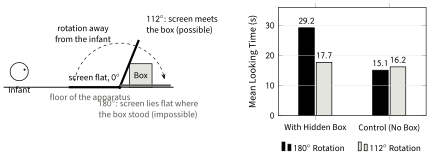
Figure 1 shows the version that Renée Baillargeon used in 1987, and the worked case below reads it in detail.
Figure 1. The drawbridge experiment of Baillargeon (1987). Left: the infant watches a screen that rotates on a hinge. After habituation, a box is placed behind the screen. In the possible event the screen stops at \(112^\circ\) where the hidden box should block it; in the impossible event it rotates the full \(180^\circ\) as if the box were gone. Right: mean looking times of the infants of 4 and a half months in Experiment 1, data from Baillargeon (1987), with 12 infants in each group.